Buying a horse property in Jackson County can feel exciting right up until you realize how many moving parts are involved. You are not just buying a house with extra land. You are buying a setup that needs to work for your horses, your daily routine, and your long-term plans. This guide will help you focus on the details that matter most in Jackson County, from zoning and pasture layout to drainage, access, and future improvements. Let’s dive in.
Start With Jurisdiction and Zoning
Before you fall in love with a barn or a pretty stretch of pasture, confirm which rules apply to the property. In Jackson County, that starts with whether the parcel is in unincorporated county land or inside a city.
Jackson County’s Unified Development Code applies to unincorporated areas, and the county notes that city ordinances apply if the property is within city limits. The county also states that code enforcement is handled only in unincorporated areas, so it is important to verify jurisdiction early instead of assuming horses are allowed.
Know the Key Zoning Districts
For horse-property buyers, three zoning districts are especially important in unincorporated Jackson County. Each one supports a different scale of horsekeeping.
Agricultural District (AG) is meant for larger tracts of 10 acres or more used for agricultural and open-space purposes. It allows uses tied to farming, animal raising, pasture, and related farm structures. In AG, the minimum lot size is 10 acres, impervious cover is limited to 15 percent, and animal enclosure areas generally must be at least 50 feet from property lines, with an exception for grazing areas for horses and other livestock.
Residential Ranchette (RR) is designed for parcels of 5 acres or more with a limited number of large animals. In this district, Jackson County allows horses at one head of livestock per acre of pasture area. That can make RR a practical fit if you want horses on smaller acreage without needing a larger agricultural tract.
Residential Estates (RE) is a lower-density residential district with 2-acre-plus lots. In RE, a private stable and up to two horses are listed as an accessory use. This district may work for buyers who want a small private setup, but it is not the same as a larger horse-focused property.
Verify the Rules Before You Act
Jackson County identifies the official zoning map as the final authority for zoning status in the unincorporated county. The county also advises buyers to confirm code accuracy with the County Clerk before relying on the online code.
That matters because zoning does more than answer whether horses are allowed. It also affects setbacks, lot size, enclosure placement, and whether your future plans, like a new barn or arena, fit the parcel at all.
Look Beyond the House
A beautiful kitchen will not fix a poor layout for horsekeeping. When you tour a property, pay close attention to how the land and improvements function together.
Horse properties work best when day-to-day tasks are simple and safe. That includes feeding, handling, turnout, clean-up, deliveries, and vehicle access. A practical setup often matters more than cosmetic finishes.
Evaluate Barns and Support Buildings
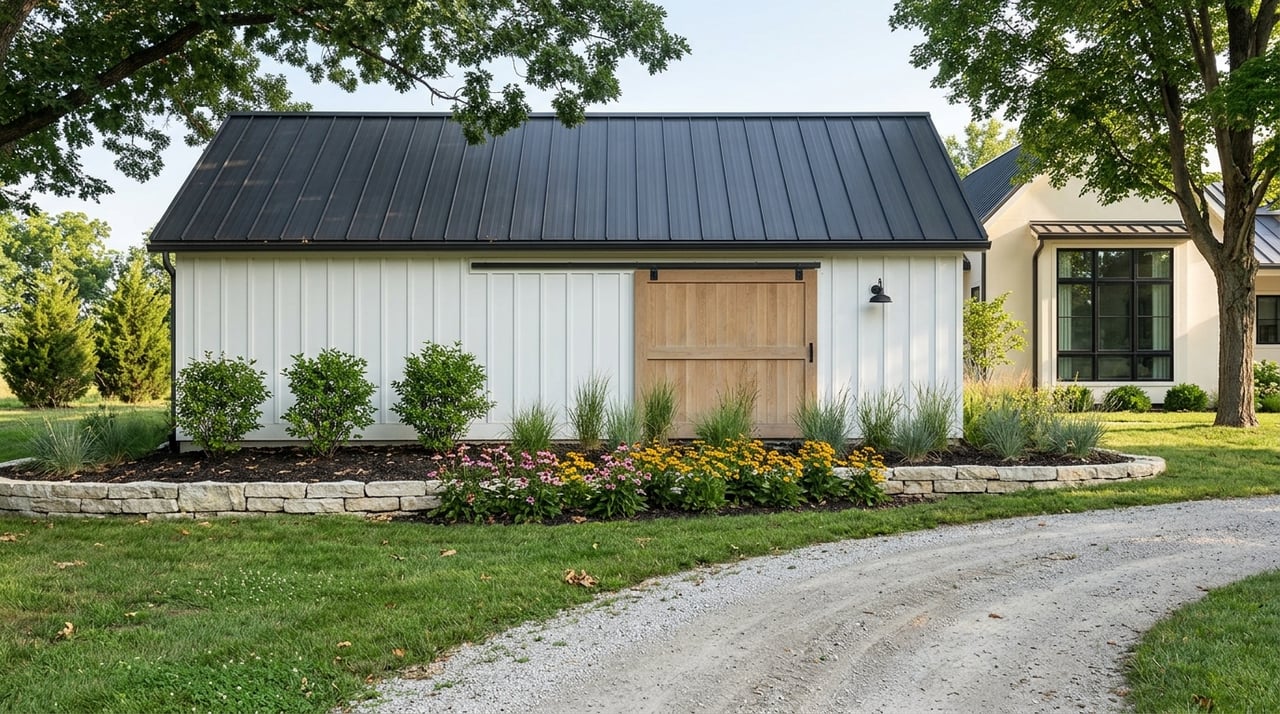
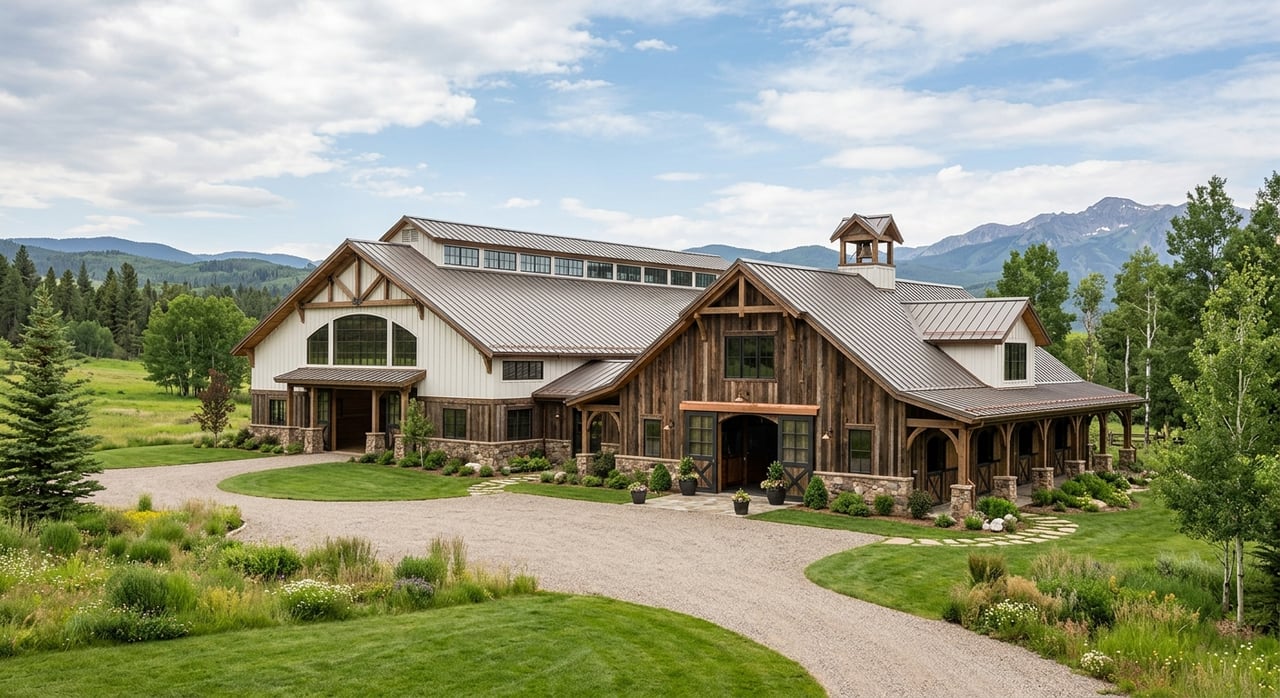
Barns, run-ins, and storage buildings should be judged by function first. Stall layout, ventilation, dry footing, feed storage, tack storage, and safe handling space all affect how usable the property will be.
Water and electricity also matter more than many buyers expect. If those systems are poorly placed or limited, even a nice-looking barn can become frustrating to use.
Think Ahead About an Arena
If you want to add an arena now or later, the site itself matters as much as the idea. You will want enough reasonably flat area, drainage that can support the improvement, and enough room to stay within setback and impervious-cover limits.
In Jackson County, zoning and development rules make site planning important long before you pick footing or fencing. A parcel may have enough acreage on paper but still be a poor fit for the improvement you want.
Check Pasture Quality, Not Just Acreage
It is easy to focus on the total number of acres. In practice, the more important question is how much of that land is usable for horses.
Missouri grazing guidance emphasizes the relationship between soil, plants, animals, water distribution, and fence design. For you as a buyer, that means a well-laid-out 10-acre property may function better than a larger tract with weak fencing, poor water access, or awkward pasture divisions.
Inspect Fencing Carefully
Fence condition deserves close attention during your search. You should look at safety, overall repair needs, gate placement, and whether the fence lines appear consistent with the property boundaries.
Missouri fence law resources from MU Extension also note that division-fence rules can affect repair and replacement responsibilities. If there is a shared fence, it is smart to clarify responsibilities before closing.
Review Forage and Grazing Potential
Pasture quality matters just as much as pasture size. MU Extension notes that tall fescue is Missouri’s most widely used perennial forage grass, but toxic endophyte-infected stands can create problems for horses and reduce performance.
That does not mean every pasture needs to be perfect on day one. It does mean you should pay attention to forage composition, weed pressure, and whether the land appears set up for sensible grazing rather than constant overuse.
Consider Carrying Capacity
If grazing will be part of your horsekeeping plan, think in terms of carrying capacity and rotation, not acreage alone. MU Extension pasture guidance stresses the importance of monitoring and managing forage use to avoid overgrazing.
This is one reason horse-property shopping can be more technical than a standard home search. The land needs to support your intended number of horses over time, not just look appealing during a showing.
Water, Drainage, and Manure Matter More Than You Think
Reliable water access is essential on any horse property. Water distribution across barns, paddocks, and pasture areas affects daily labor and the long-term usability of the land.
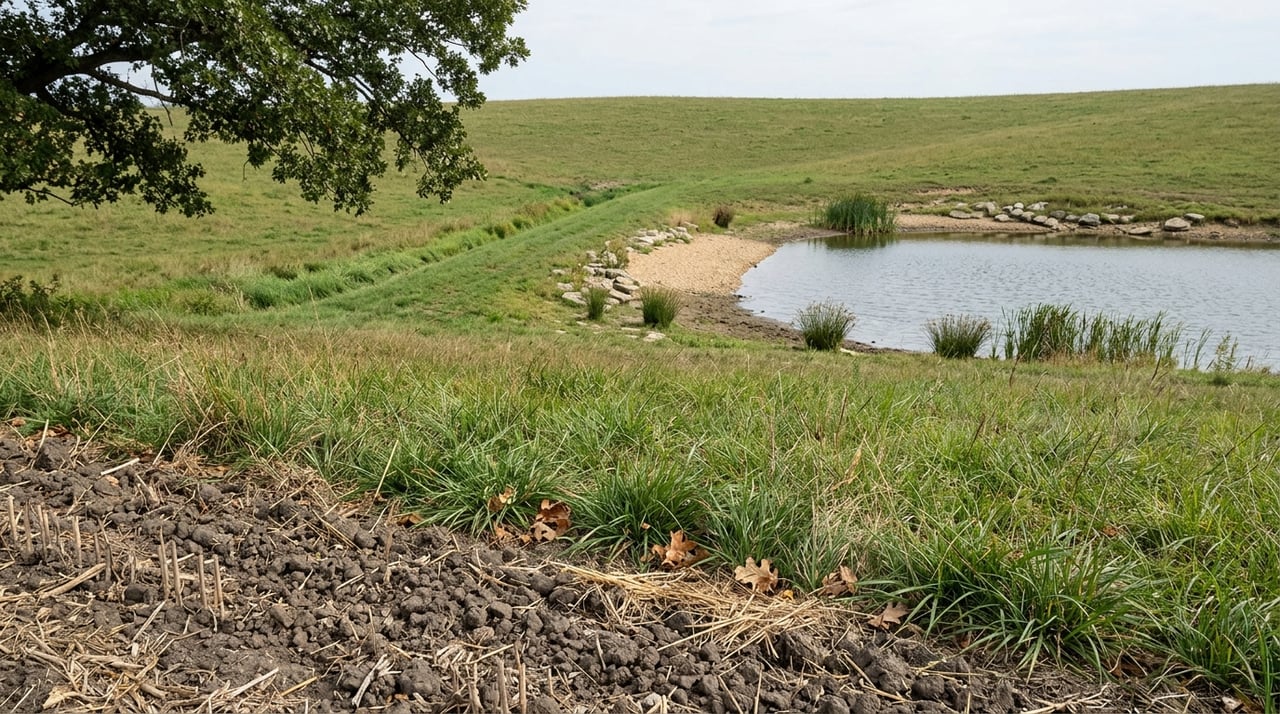
Drainage is just as important. Low spots, muddy gates, soft ground near shelters, and standing water around barns can quickly turn a promising property into a maintenance-heavy one.
Watch the Runoff Pattern
When you tour a property, study how water moves across the site. Pay attention to barn entrances, dry lots, gates, sacrifice areas, and any places where manure and runoff might collect.
MU Extension manure-management guidance makes clear that runoff control and manure handling are part of the full livestock system. They are not small details to figure out later.
Ask Early About Floodplain Concerns
Jackson County specifically advises buyers to consult the Development Division for floodplain information before purchasing land or starting construction. The county’s building-code and stormwater guidance also reinforce that drainage and water management belong in your due diligence from the start.
That is especially important if you may want to build later. A parcel with floodplain or drainage constraints may limit where you can place a barn, paddock, or arena.
Review Access, Utilities, and Site Limits
Horse properties need to work for more than passenger vehicles. Access should support horse trailers, hay deliveries, manure removal, and emergency response.
Jackson County’s subdivision review standards also consider factors like street access, topography, soils, hydrology, floodplains, wetlands, vegetation, and utilities. Those site conditions can affect how usable a property feels after closing.
Check Well and Septic Early
If the property relies on a private well or onsite septic system, review those items early in the process. Jackson County Public Works handles permits and development-related issues, and Missouri DHSS notes that onsite wastewater decisions are heavily shaped by site and soil limitations.
For buyers, that means future improvements may depend on more than just available space. Soil and site conditions can influence what is practical or approvable.
Search Parcel and Code Records
Jackson County encourages buyers to use the Parcel Viewer and property-code search before writing an offer. The county also warns that title searches alone may not reveal code violations.
That is a valuable step for horse-property buyers because hidden code issues can affect barns, additions, fences, or other improvements. It is much better to identify those concerns before inspections and negotiations move forward.
Plan for Future Expansion
Many buyers are not only shopping for what they need today. They are also thinking about adding a barn, creating more paddocks, or building an arena later.
The best expansion candidates are usually properties where the current zoning already supports that future use. In Jackson County, AG and RR generally offer a better fit for larger horse-focused layouts, while RE is more limited and specifically tied to a private stable with up to two horses.
Match the Property to Your Long-Term Goals
If you may want more horses later, a parcel that barely works today may not serve you well in a few years. Check setbacks, lot width, impervious-cover limits, and whether your planned use is allowed in the district.
County development review exists because not every farm-style improvement is automatically permitted everywhere. A strong horse-property purchase is one where the land, zoning, and layout all support the next chapter too.
Understand Tax Classification Questions
Tax treatment can also shape the long-term cost of ownership. Jackson County lists agricultural property at a 12 percent assessment rate, compared with 19 percent for residential property.
Missouri law also states that agricultural land is valued on productive capability and use rather than ordinary market value. If a property’s use changes or land is split off, reassessment can become an issue, so buyers considering future division or a change in use should review those implications before closing.
A Practical Jackson County Checklist
If you want a simple way to organize your search, focus on these items early:
- Confirm whether the property is in unincorporated Jackson County or inside a city
- Identify the zoning district and verify horse limits, accessory-use rules, and setbacks
- Walk the pasture and review fencing, water access, forage quality, and drainage
- Ask about floodplain, stormwater, well, and septic constraints
- Review parcel records and code-violation status before writing an offer
- Compare the current setup with your future plans for horses, barns, paddocks, or an arena
A horse property purchase in Jackson County is part lifestyle decision and part land-use decision. When zoning, pasture function, drainage, access, and expansion potential all line up, the search becomes much more predictable. If you want experienced guidance as you sort through acreage, horse setups, and the details that can make or break a property, Dana Benjamin is here to help.
FAQs
What zoning should you look for when buying a horse property in Jackson County?
- In unincorporated Jackson County, AG, RR, and RE are key districts to review. AG is intended for larger agricultural tracts, RR supports limited livestock on 5-acre-plus parcels, and RE allows a private stable with up to two horses as an accessory use.
How many horses can you keep on a Jackson County RR property?
- Jackson County allows horses in the RR district at one head of livestock per acre of pasture area.
Why does jurisdiction matter for a horse property in Jackson County?
- Jurisdiction matters because city ordinances apply if the parcel is inside a city, while Jackson County’s Unified Development Code applies to unincorporated areas.
What should you inspect first on a horse property in Jackson County?
- Start with zoning, pasture layout, fencing, water access, drainage, barn function, and access for trailers and deliveries.
Can you add an arena to a horse property in Jackson County?
- It depends on the parcel’s zoning, site drainage, available flat area, setbacks, and impervious-cover limits.
Why is pasture quality important when buying a horse property in Missouri?
- Pasture quality affects grazing potential, horse health, and long-term land management, so usable forage and layout often matter more than raw acreage.
Should you check code violations before buying land in Jackson County?
- Yes. Jackson County advises buyers to search parcel records and code-violation status early because title searches alone may not show all issues.