Wondering whether a Miami County tract is better suited for grazing, hay, or row crops? That question matters more than the listing description, because two parcels with the same acreage can perform very differently once you look at soils, slope, water access, and county records. If you are evaluating pasture or tillable land in Miami County, this guide will help you focus on the details that shape real-world use and long-term value. Let’s dive in.
Start With Soil Capability
The first step is understanding what the soil can reasonably support. The NRCS Web Soil Survey is a key tool because it provides current soil data that can help you evaluate land-use decisions for a specific tract.
A useful shortcut is the USDA land capability system. In general, Classes 1 through 4 are more crop-oriented, while Classes 5 through 8 have greater limitations and are typically better suited to pasture, grazing, forestland, wildlife habitat, or other non-cropland uses.
That said, a soil map is only the starting point. K-State’s land-judging framework looks beyond the map to factors like soil texture, structure, depth, permeability, erosion, slope, drainage, flooding, and soil-test information.
For you as a buyer, that means the price per acre should never be the only metric. Recent soil tests, topsoil depth, and any lime or nutrient needs should all be part of your due diligence before you decide whether the land fits your goals.
Look Beyond “Tillable” Labels
A tract may be described as tillable, but that does not always mean every acre is equally productive or easy to farm. Drainage issues, shallow topsoil, flood-prone areas, or erosion concerns can limit what appears workable on paper.
In Miami County, the better question is not just “Can it be farmed?” but “How consistently can it produce?” Land that struggles with wetness or runoff may be more practical as forage ground or managed pasture than as reliable cropland.
Pasture Can Still Be Highly Functional
Not every strong land purchase needs to center on row crops. K-State notes that Kansas forage systems can include warm-season or cool-season forages, permanent brome pasture, annual cover crops, or even crop residues grazed after harvest.
That gives you flexibility when a tract is not ideal for continuous crop production. In some cases, a parcel’s best use may be forage-based, especially when soils and drainage point toward pasture management over intensive tillage.
Review Slope, Drainage, and Erosion
Topography can quickly change how land performs. Even if a tract has decent soils, slope and wetness may affect whether it is truly practical for tillable use.
K-State connects sloping fields with conservation practices such as contour farming, terraces, diversion terraces, and drainage systems when runoff or wetness is an issue. That matters because improvement costs and management demands can shape whether the land works for your plan.
The Kansas Daily Erosion Project also highlights how erosion risk is tied to elevation, soils, land use, land management, and weather. In plain terms, steeper or less-protected acres deserve closer review before you treat them like premium tillable ground.
Watch for Visual Warning Signs
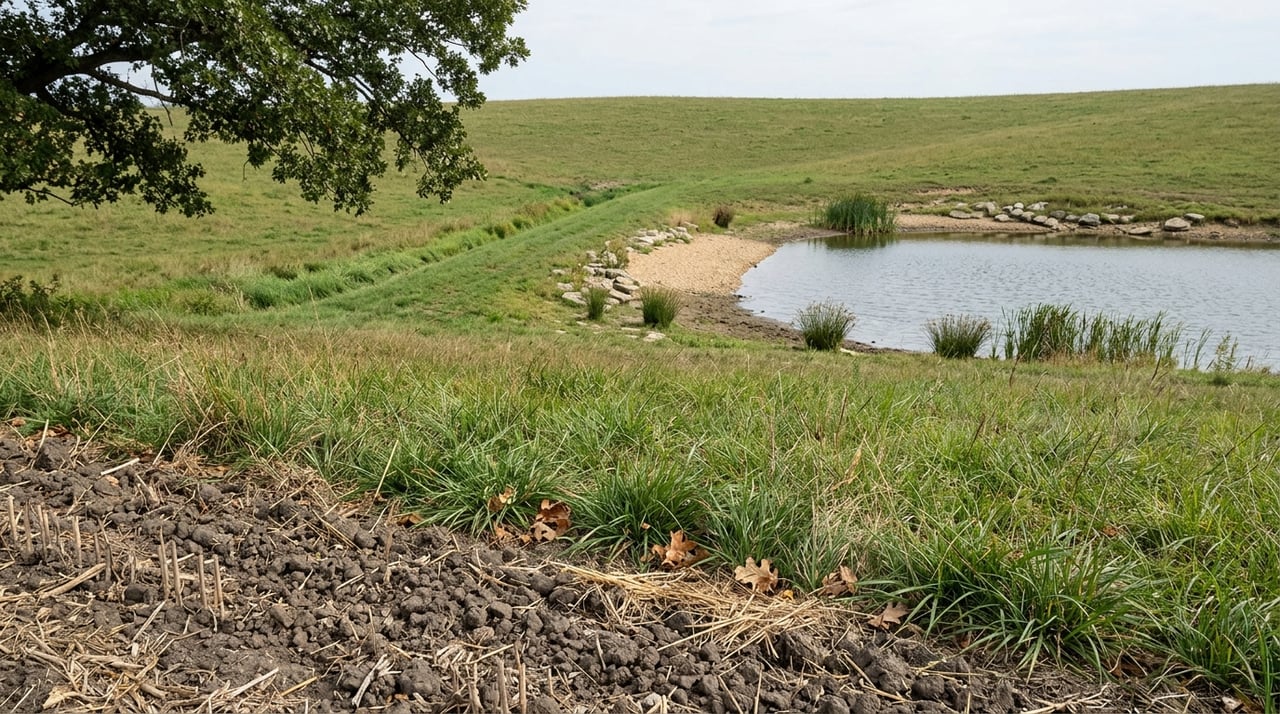
When you walk the property, pay attention to what the land is telling you. Washes, gullies, sediment in ponds, and worn drainageways can all be signs that runoff, slope, or past tillage has already affected productivity.
These features do not always mean a tract is a poor purchase. They do mean you should factor in the possibility of conservation work, drainage improvements, or a different use strategy to help the property perform at its best.
Check Water Access and Fence Infrastructure
If you are evaluating pasture, infrastructure matters just as much as acreage. K-State notes that pasture value depends heavily on fence condition, water availability, grass type and quality, and who pays for fence upkeep.
This is why two similarly sized parcels can have very different practical value. A tract with strong perimeter fencing, useful cross-fencing, and water placed where livestock actually need it may function far better than a larger parcel with weaker setup.
Water Placement Affects Grazing Performance
Topography influences pasture use in ways buyers sometimes miss. K-State says cattle tend to graze more efficiently near water than on steep slopes, and that distance to water, slope, and forage quality all shape grazing behavior.
So even if the grass looks healthy, the pasture may underperform if water access is poorly located. In some cases, adding water points or reworking the grazing layout can improve how the land is used.
Ponds Need a Closer Look
A pond can be an asset, but it should not automatically be treated as a complete water solution. K-State recommends limiting unrestricted livestock access to ponds because fencing a pond can reduce shoreline erosion, sedimentation, and water-quality problems.
If a pond is fenced, livestock will need another water source, such as a pipeline to a tank or a limited-access ramp. Additional water sources can also improve pasture utilization and reduce pressure on riparian areas.
Verify Water Rights for Irrigation Plans
Kansas water law makes an important distinction for land buyers. According to the Kansas Department of Agriculture, domestic use includes household water and watering livestock on pasture, so no permit is needed for that class of use.
Irrigation and other non-domestic uses generally require a water right or permit. If you see irrigation equipment or plan to irrigate, verify the existing water-right or diversion records rather than assuming the setup is already approved.
Use Miami County Records Early
Before you get too far into a land purchase, pull the county records. Miami County’s GIS and appraisal tools can give you a strong first-pass look at property characteristics, land size, tract descriptions, and map overlays such as floodplain, tax unit, and city-limit information.
The GIS division can also help locate property by address, owner name, or legal description. For buyers comparing multiple tracts, this is one of the simplest ways to narrow the field before spending more time in deeper review.
Confirm Tax Classification
Miami County states that agriculture land is assessed at 30% of its use-value appraisal. That does not tell you whether the tract is good pasture or strong tillable ground, but it does make tax classification worth confirming before closing.
The county also notes that agriculture use property is land and buildings devoted to agricultural uses. If your plans differ from the current use, it is smart to ask how that could affect classification and related costs.
Ask Planning and Zoning Early
Miami County Planning and Zoning administers the comprehensive plan, subdivision regulations, and zoning regulations. This office can help verify floodplain status, setbacks, minimum lot size, access requirements, and allowed business uses.
The county’s zoning regulations state that they do not apply to the use of land for agricultural purposes in unincorporated Miami County. Still, if you plan to change the use, split lots, add a homesite, or pursue a non-ag use, you should confirm what approvals may be required before moving forward.
Questions to Ask Before You Buy
A good land review is part field visit, part document review. If you are comparing pasture and tillable land in Miami County, these are smart questions to bring into the process.
- What soil capability classes appear in the Web Soil Survey for this tract?
- Are there drainage, flooding, or permeability limitations that affect crop or forage use?
- Is there a recent soil test, and does it show lime or nutrient needs?
- Are there visible erosion issues such as gullies, sediment, or stressed drainageways?
- Where are the water points, and do they support the way livestock would actually use the pasture?
- If there is a pond, is access controlled or fenced?
- Are perimeter fences and cross-fences in serviceable condition?
- If the property is leased, who handles fence maintenance?
- Does county GIS show floodplain, city-limit, or tax-unit issues that affect your plan?
- If irrigation, a homesite, a lot split, or a non-ag use is part of the plan, what county or water approvals are needed first?
Match the Land to Your Goal
The best tract is not always the one with the most open acres or the most attractive listing photos. It is the one that aligns with your intended use after you weigh soil capability, slope, drainage, erosion risk, fencing, water access, and county-level details.
If you are buying for livestock, forage systems, or long-term land stewardship, a well-set-up pasture may be more valuable to you than acres that look tillable but come with hidden limitations. If you are buying for crop production, the same review helps you avoid overpaying for acres that may require more input or management than expected.
In Miami County, careful evaluation upfront can save you time, money, and frustration later. And when you are looking at niche acreage, having local guidance can make the process feel much more manageable.
If you are considering pasture, tillable ground, or lifestyle acreage in Miami County, Dana Benjamin can help you evaluate the land through both a real estate and practical-use lens, so you can move forward with more confidence.
FAQs
What should you review first when evaluating land in Miami County?
- Start with the NRCS Web Soil Survey and then compare that information with slope, drainage, erosion signs, water access, fencing, and Miami County records.
What makes land better for pasture instead of tillable use in Miami County?
- Land with greater soil limitations, drainage issues, slope concerns, or erosion risk may be better suited for pasture, grazing, forage production, or other non-cropland uses.
Why do soil tests matter when buying Miami County farm ground?
- Soil tests can reveal nutrient needs, lime needs, and other conditions that affect productivity and future input costs.
What pasture features matter most on Miami County acreage?
- Fence condition, cross-fencing, water availability, grass type and quality, and practical livestock access to water all affect how well a pasture functions.
Do you need a permit to water livestock on pasture in Kansas?
- According to the Kansas Department of Agriculture, domestic use includes watering livestock on pasture, so no permit is needed for that use, but irrigation and other non-domestic uses generally require a water right or permit.
What county offices should you check before buying Miami County land?
- Review Miami County GIS and appraisal records first, then contact Miami County Planning and Zoning if your plans involve floodplain questions, setbacks, access, lot splits, homesites, or changes in use.