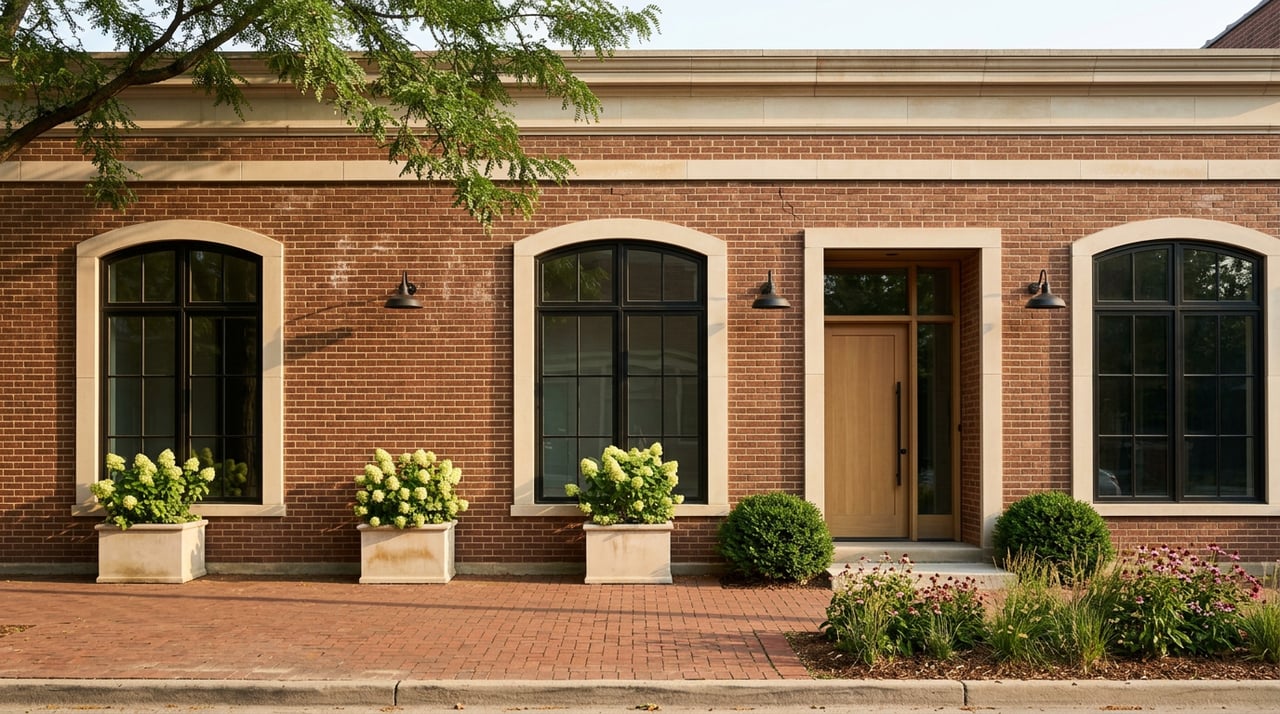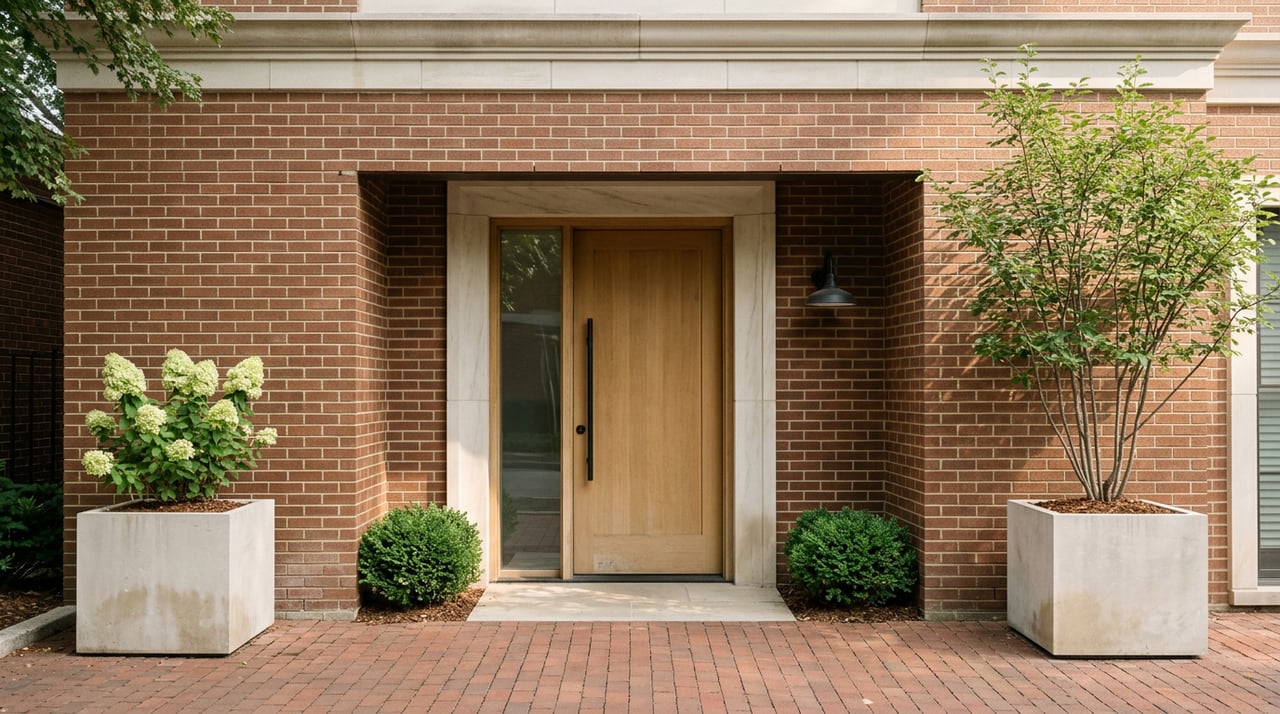
Walk through Clock Tower Landing on a Saturday morning in August and it looks like exactly what it is: a busy market on a hot day, tomatoes and peaches stacked under permanent shade structures, more than 100 vendors working a pavilion that didn't exist a year ago. It's an easy scene to photograph and an easy story to tell. It's also the wrong story.
The building's most telling design choice has nothing to do with summer. The new $34 million pavilion has heat for winter. It does not have air conditioning for summer. Ventilation comes from garage doors on the north side, clerestory windows that open electronically, and ceiling fans, according to Axios Kansas City's reporting on the project. Downtown Overland Park was never short on reasons to show up on a warm Saturday. What it lacked was a reason to show up in January. That's the problem this building was actually built to solve, and the businesses moving into the blocks around it are placing the same bet.
A Pavilion Built for the Months Nobody Was Talking About
The old farmers market pavilion went up in 1991 and has since been razed. It ran roughly a Saturday-morning season, drew about 90 vendors, and then went quiet for the winter, according to Fox4KC's coverage of the reopening. The new one, officially named Clock Tower Landing, opened to the public on June 5, 2026 with a ribbon-cutting followed the next morning by the first market of the season, per KCTV5's report on opening weekend. But the calendar the city built toward isn't a longer summer. It's a market that runs April through November, a holiday market between Thanksgiving and Christmas, and a separate winter market in January, according to Spectrum News' coverage of the project. That's four seasons of foot traffic through a stretch of Santa Fe Drive that used to go dormant for a third of the year.
The completion date wasn't an accident either. Kansas City hosted six FIFA World Cup matches this summer, and Overland Park timed the pavilion's opening so it could double as watch-party space during the tournament, per the same Axios report. Clock Tower Landing hosted watch parties on June 16 and July 11, while other city celebrations spread across Scheels Overland Park Soccer Complex, the Prairiefire entertainment district and Bluhawk, according to the Overland Park Chamber's event guide. The World Cup gave the project a deadline. The heating system and the winter market schedule show what the project was actually for.
Here's what changed, side by side:
| Old Pavilion (pre-2025) | Clock Tower Landing (2026) | |
|---|---|---|
| Vendors | About 90 | More than 100 |
| Season | Roughly April through fall Saturdays | April to November, plus a holiday market and a January winter market |
| Climate control | Open-air, no heat | Heated for winter, fan and window-ventilated for summer |
| Market days | Saturdays | Wednesdays and Saturdays |
| Other uses | Market only | Concerts, movie nights, watch parties, a courtyard screen |
The market itself now runs at 7950 Santa Fe Street, with sales starting at 7:30 a.m. on both market days. That two-day schedule, up from one, is a small detail that matters more than it looks. A Saturday-only market is a weekend errand. A Wednesday-and-Saturday market is a habit.
The Restaurants Placing the Same Bet
If the city is betting on year-round foot traffic in a few blocks of downtown, the interesting question is who else is betting alongside it. Look at where the smaller, chef-driven restaurants opening this year have chosen to land, and where the bigger entertainment concepts have not.
Kiyoshi Omakase opened this spring just off 80th Street and Santa Fe Drive, near Thompson Park, in a space that previously housed the Ethiopian restaurant Abol, according to the Johnson County Post's coverage of the opening. It's an eight-seat counter serving 14 chef-curated courses, the kind of restaurant that depends on repeat, walk-to-it customers rather than highway visibility. A few blocks over, The Dressing Room, a speakeasy tucked into the ground floor of the InterUrban Art House behind Heddi Monro's boutique, opened the same way: downtown, small footprint, built around discovery rather than drive-by traffic, per Visit Overland Park's roundup of new openings. Tallboyz Garage, the next chapter for the old Brew Lab taproom space, made the same downtown bet with craft beer, trivia and a room built for regulars rather than tourists.
Compare that to 69 Sushi, an all-you-can-eat concept that opened this year at Stanley Square, the shopping center at 151st Street and U.S. 69, well south of Thompson Park and the downtown core, according to the Johnson County Post's story on that opening. Bigger-format entertainment concepts like an indoor slide park and a batting-cage venue with ten interactive suites landed elsewhere in the city this year too, the kind of square footage that a historic downtown storefront simply doesn't have room for.
None of this means downtown is winning and south Overland Park is losing. It means two different kinds of businesses are reading the same city differently. The concepts that need a lot of square footage and highway visibility are choosing corridors built for that. The concepts that need a walkable, repeat-visit crowd are choosing the three or four blocks around a pavilion the city just spent $34 million making usable twelve months a year. Bryan Toben, the city's parks and recreation director, put it plainly when the pavilion opened: it's a gathering place for the community to host events, throw parties and celebrate together, and the district is being built for everybody to enjoy and be together.
What's Actually Happening This Month
For anyone deciding where to spend a Thursday or a Friday night in the next two weeks, the calendar is specific:
- Thursday, August 13 – Thompson Park's Concerts in the Park continues with free live music, part of a series that runs select Thursday evenings through the summer, arrive early and the splash pad and playground are already running for kids.
- Friday, August 21 – Downtown OP's Third Fridays, a free community event that's become a regular fixture in the district.
- Ongoing, Wednesdays and Saturdays – The Farmers Market at Clock Tower Landing, 7950 Santa Fe Street, opening at 7:30 a.m.
That's not a seasonal highlight reel. It's a district that has a reason to be busy on a Wednesday morning, a Thursday evening and a Friday night in the same week, something the old pavilion's single Saturday slot never offered.
Why the Heating System Is the Real Headline
The easy version of this story is "downtown got a facelift." The more accurate version is that Overland Park looked at a building that only worked eight months a year and decided the fix wasn't more shade structures or more vendor stalls. It was a system that keeps the lights on, literally, when it's 20 degrees outside. A holiday market between Thanksgiving and Christmas and a market in January only make sense if the building can handle it, and the fact that the city built for heat before it built for air conditioning tells you which season they were actually worried about losing.
The businesses filling in around that bet, at least so far, are the smaller ones willing to trade square footage for a spot people will walk to in any month. Whether that pattern holds through a full winter season remains to be seen. The market's January debut will be the real test of whether year-round downtown Overland Park is a design plan or just a design.
For residents who've watched this stretch of Santa Fe Drive cycle through Matt Ross Community Center relocations, 18 months of construction and now a genuinely different rhythm, it's worth paying attention to which restaurants, retailers and gathering spots keep showing up in the next few blocks. That pattern tends to say more about a neighborhood's direction than any single opening does.
If you're watching this corner of Johnson County for reasons beyond a Thursday night out, whether that's a move, a sale or simply understanding how a specific block of downtown is trending, The Benjamin Team has spent years tracking these shifts up close. Reach out anytime to talk through what a changing downtown means for property in the surrounding blocks.